
Every governance action has a proposer, identified on-chain by the reward (return) address that receives the action deposit back. How that proposer is shown depends on where you are looking.
In the actions overview
The overview has one small slot per row, so it shows a single best label:
-
Known organizations (such as Intersect, Eternl, Blink Labs, and others that propose regularly) are shown with their name and, where available, logo. Entries without a logo show the name with an identicon. This is a list DRepTalk curates and maintains by matching the action’s reward address, it is not an on-chain verification of identity.
-
Actions whose metadata names authors are shown with the first declared author’s name. These names are self-declared in the action document and unverified.
-
Everyone else is shown with a deterministic identicon generated from the reward address, plus the address itself. The same address always produces the same icon, so a recurring proposer is still recognizable even before it is added to the curated list.
The curated labeling is experimental. It is a convenience for recognizing frequent submitters, kept deliberately small, and it may change as better on-chain identity signals become available.
On the action page
The action detail page does not collapse anything into one label. It shows the two on-chain signals separately, exactly as they appear on the chain:
-
The Proposer card shows the submitter: the holder of the reward address that posts and reclaims the action deposit (with the curated name when known, otherwise the identicon and address).
-
The Authors card lists the names the action’s own metadata document declares as authors. They are rendered verbatim, without logos or links, and without verification.
Submitter and authors can differ. Some organizations, such as Intersect, submit and administer many actions on behalf of various authors, so a known label reflects who submitted an action, not necessarily who wrote it.
The curated list is maintained in the open. You can see exactly which organizations and addresses are recognized, and suggest additions, in config/proposers.ts on GitHub.
Co-proposers
A proposer account can authorize up to two co-proposers: colleagues who sign in with their own wallet and write on the proposer’s behalf. Their posts show their own name together with a badge naming the proposer they write for, so readers always see both the person and the mandate.
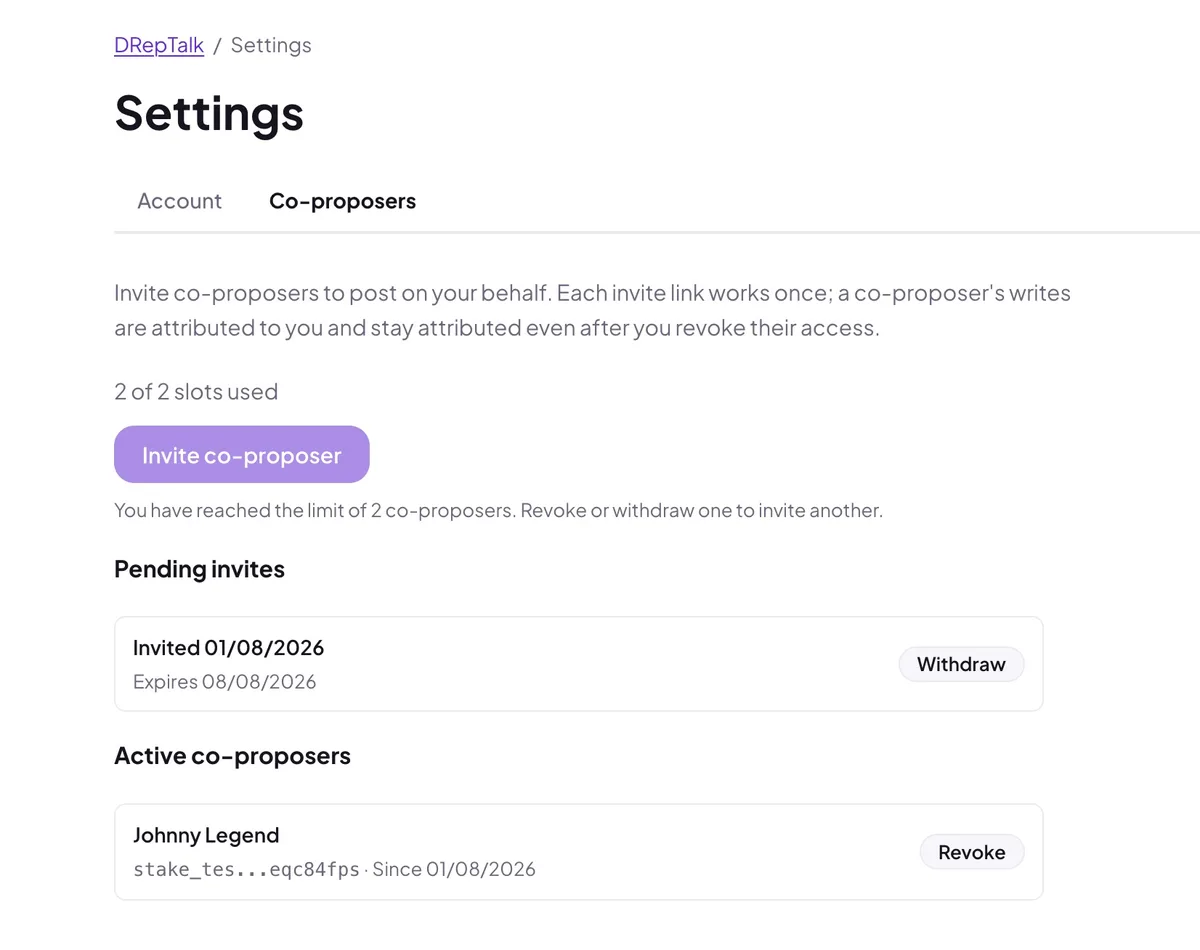
Inviting. Sign in as a proposer and open Settings, Co-proposers. Creating an invite gives you a one-time link that is valid for 7 days and can be redeemed exactly once. The link is the credential: anyone who opens it can claim the invite, so share it only over a private channel with the person it is meant for.
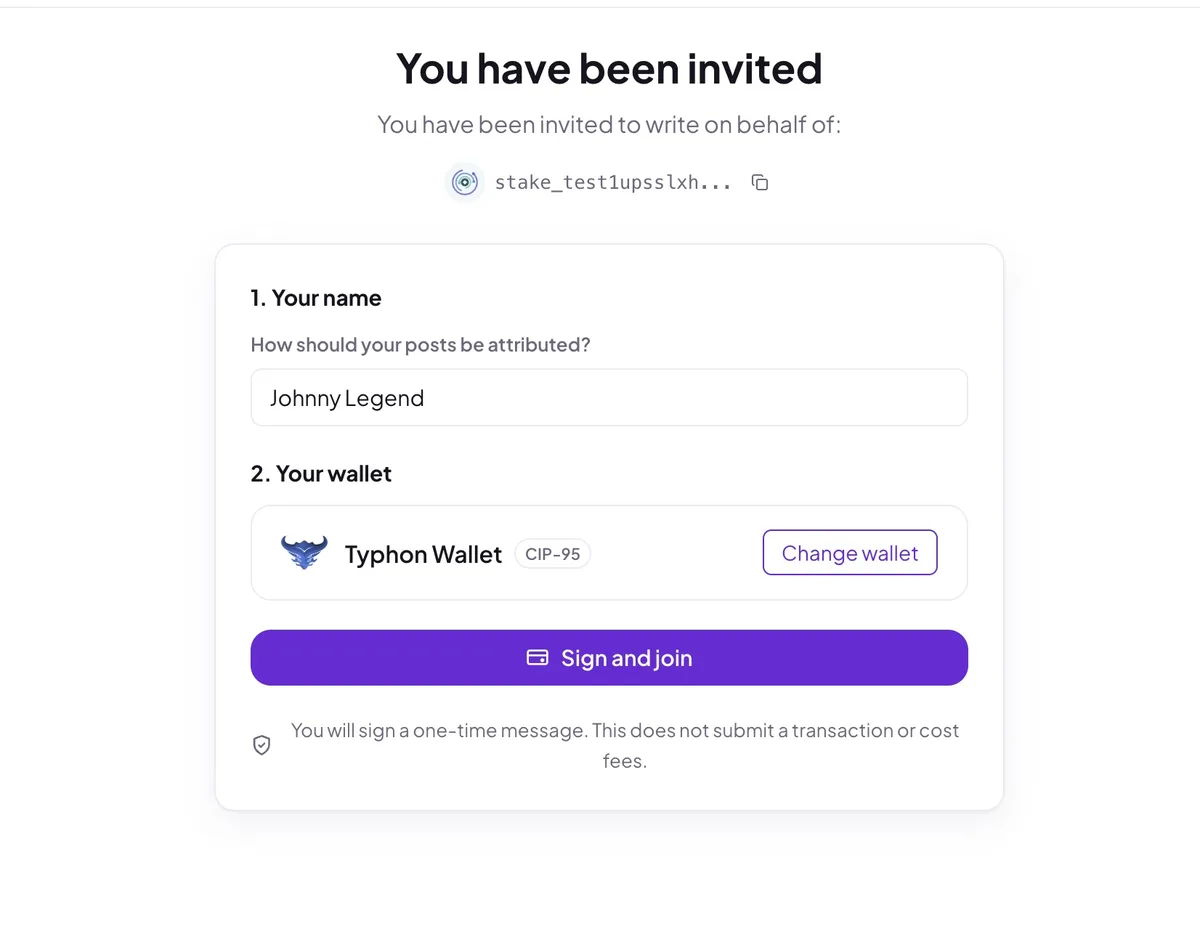
Accepting. The invited person opens the link, picks a display name, connects their own Cardano wallet, and signs a confirmation. No on-chain role or transaction is required on their side. Afterwards they sign in through the normal proposer sign-in with their own wallet.
Revoking. The proposer sees all pending invites and active co-proposers in the same settings section and can withdraw or revoke them at any time. Revoking ends the co-proposer’s access immediately. Posts written under the mandate keep their badge, since it records who wrote on whose behalf at the time.
Co-proposers cannot invite further people, and a wallet can hold only one mandate at a time.
Discussing a proposal before you submit it
You can share a draft of your governance action in Proposal Drafts and collect feedback from DReps first. Once the action is on-chain, the draft connects to its thread. See Get feedback on a proposal.